

In Flagler County, Florida, an opportunity arose to treat HVAC modernization not as a one-off capital project, but as a replicable, district-wide strategy that can serve as a blueprint for other districts. | Photo Credit: Matern Professional Engineering
By Ryan Strandquest, Kory Bush and Michael MetzÌýÌý
Across the country, K-12 school districts are navigating a tough, familiar equation: aging buildings, rising utility costs and intense pressure to stretch every tax dollar. HVAC systems, particularly central energy plants, often sit at the center of that challenge. They’re essential, expensive to maintain and easy to postpone until problems become emergencies. At the national level, the Ìýeach year on energy, making it the second-largest expense after salaries.ÌýÌý
In Flagler County, Fla., an opportunity arose to treat HVAC modernization not as a one-off capital project, but as a replicable, district-wide strategy that can serve as a blueprint for other districts. By modernizing central energy plants at two high schools (Flagler Palm Coast High School and Matanzas High School), the county is reducing long-term operating costs while securing substantial financial support through utility rebates and available federal incentives.Ìý
The most important takeaway for other districts is that — with the right planning, documentation and collaboration — central-plant modernization can deliver meaningful returns without “breaking the budget.â€� In many cases, districts could see financial benefits ranging from $500,000 to $1.2 million, depending on project scope, timing, and eligibility for rebates and energy tax credits. Those benefits can scale, but they can also move in the opposite direction if incentive rules change or programs sunset before a project is placed in service.ÌýÌý
Start with a Systemwide Lens Ìý
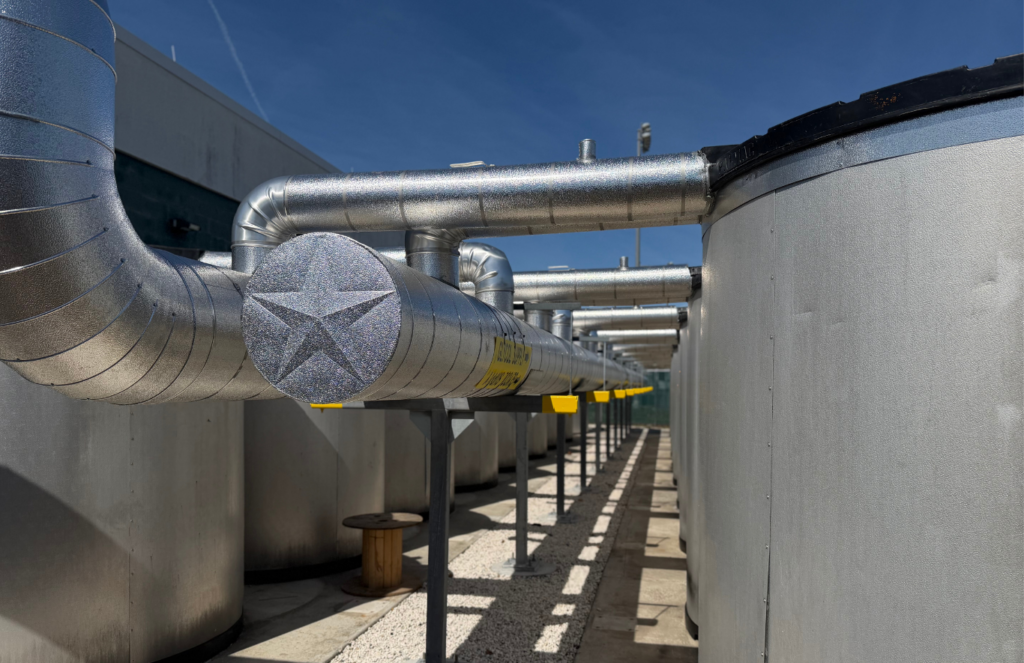
Too often, districts are forced into reactive decisions: replace a failing chiller here, patch controls there, and hope the system holds togetherÌýfor a few moreÌýyears. Instead, Flagler Schools and Matern Professional Engineering took a system-wide approach,Ìýstarting with feasibility assessments and campus evaluations toÌýidentifyÌýsolutions that were both economical and maintenance-friendly.Ìý
At Flagler Palm Coast High School, the modernized central energy plant came online in December 2025 and is projected to save the district more than 213,000 kilowatt-hours annually. Importantly, the project also earned a $293,000ÌýPower Company (FPL)Ìýenergy rebate that helps offset costs and accelerate ROI,Ìýbringing the return on investment to under five years when paired with rebates.Ìý
At Matanzas High School, the modernization effort is currently underway and is more complex due to coinciding construction projects on campus. Completion is set for August 2026. Even with that complexity, the district applied the same disciplined planning approach, looking hard at what could be reused, what could be elevated and where targeted expansion would outperform full replacement.Ìý
ThatÌýdecision ofÌýdiligenceÌýmattered.ÌýByÌýreusing and elevating existing infrastructure at Flagler Palm Coast High School and expanding the plant at Matanzas, the district saved more than $1 million in construction costs.Ìý
Value Engineering Doesn’t Mean Value CuttingÌý
Budget pressure is real,Ìýespecially with the lingering effects of tariffs and COVID-era cost escalations. The lessonÌýforÌýany district is thatÌývalue engineering works best whenÌýguided by performance goalsÌýandÌýÌýlongÌýterm lifecycleÌýrational.Ìý
On the Flagler Palm Coast project, the teams made several practical value-engineering decisions to protect the project’s intent while controlling costs. For example, the team cut nonessential elements while pursuing direct equipment purchases and early procurement strategies to reduce exposure to market volatility. The team also carefully worked through “keep vs. replaceâ€� decisions to avoid spending money on upgrades that wouldn’t materially improve performance or maintenance outcomes.Ìý
These are the kinds of choices that add up, especially at scale across a district, state and national portfolio.Ìý
Incentives Can Be Transformative
Utility rebates and federal incentives can improve project economics, but theyÌýcomeÌýwithÌýdocumentationÌýrequirements. District leaders should go into modernization projects assuming that documentation is a core workstream.Ìý
For Florida Power & Light (FPL) rebates, documentationÌýmay includeÌýaÌý8760-load study, a model that accounts for performance every hourÌýacross a span of 12 months, andÌýcommissioning documentation, including a commissioning letterÌýsigned and sealed by a professional engineer.Ìý
For energy tax credits available under programs tied to theÌý, specifically,ÌýtheÌýClean Electricity Investment Tax CreditÌý(26 U.S. Code §48E), documentation and compliance expectations can extend to contractor practices,Ìýsuch as requirements connected to Davis-Bacon wages and U.S.-made materials thresholds. Those factors influence decisions as early as design and procurement.ÌýIn addition, manyÌýIRA-related creditsÌýincludeÌýprevailing wageÌýand apprenticeship requirements;Ìýmeeting those labor standards can significantly increase the value of the credit.ÌýÌý
There’sÌýalso a time dimension. Current policy includes a program sunsetÌýin 2035, but districts should be realistic about the uncertainty of future extensions, asÌýmany have seen with the 179D tax credit landscape. The practical message: if incentives are part of the ROI story, districts should move with urgency, not assumption.ÌýThe IRA createdÌýnew opportunities for tax-exempt entities, including schoolÌýdistricts, through elective pay (also called “direct payâ€�), which allows eligible entities to receive a payment equal to the value of certain clean energy tax credits if requirements are met.ÌýÌý
A Simple Three-Phase Playbook Other Districts Can FollowÌý
A three-phase approach can help districts replicate results while minimizing risk.Ìý
First,Ìýconduct a feasibility assessmentÌýwith an engineer.ÌýBefore committing to major upgrades, districts should verify that the project makes sense financially and operationally,ÌýidentifyÌýrebate and incentive pathways, andÌýestablishÌýan ROI model that stakeholders can stand behind.
Second,Ìýexecute withÌýthe contractor and document along the way. Construction success isn’t just installing equipment correctly; it’s also ensuring the right protocols, records, and verification steps are in place to support rebate submissions, commissioning and long-term performance tracking.
Third, bring inÌýaÌýqualified tax consultant. If federal incentives are part of the financial plan, districts should engage a licensed CPA or experienced tax professional early enough to ensure that procurement, contracting and documentation align with eligibility requirements. This is especially important because elective pay claims require IRS pre-filing registration and are tied to tax filing timelines.
The Bigger Outcome: Better Learning Environments and Better StewardshipÌý
Central energy-plant modernization isn’t just an energy story; it’s a stewardship story. The savings and rebates not only reduce utility bills, but they also create flexibility for districts to support staffing, reinvest in capital improvements, and deliver better environments for students and educators. Public school districts everywhere are grappling with the same pressures. The experience of Flagler County shows that with collaboration, disciplined planning, and a strategy that treats incentives as part of the project, HVAC modernization can become a repeatable blueprint for districts across the country.Ìý
Ryan Strandquest, LEED AP, is the President of Matern Professional Engineering. Kory Bush is the Director of Plant Services at Flagler County Public Schools. Michael Metz is a Plant Services Supervisor at Flagler County Public Schools.Ìý